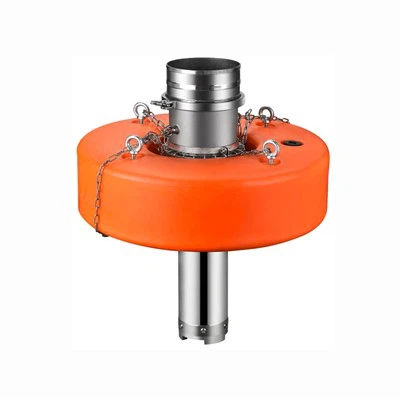
As a supplier of Mining Water Pumps, I understand the crucial role these pumps play in mining operations. Measuring the efficiency of a mining water pump on - site is of utmost importance for several reasons. It helps in optimizing energy consumption, reducing operational costs, and ensuring the smooth running of the mining process. In this blog, I will share some practical methods to measure the efficiency of a mining water pump on - site.
Understanding the Basics of Pump Efficiency
Before diving into the on - site measurement techniques, it's essential to understand what pump efficiency means. Pump efficiency (η) is defined as the ratio of the useful power output (water power) to the power input (shaft power). Mathematically, it can be expressed as:
[ \eta=\frac{P_{w}}{P_{s}} \times 100% ]
where (P_{w}) is the water power and (P_{s}) is the shaft power.
The water power ((P_{w})) can be calculated using the following formula:
[ P_{w}=\rho g Q H ]
where (\rho) is the density of the fluid (for water, (\rho = 1000\ kg/m^{3})), (g) is the acceleration due to gravity ((g = 9.81\ m/s^{2})), (Q) is the flow rate of the pump ((m^{3}/s)), and (H) is the total head of the pump ((m)).
The shaft power ((P_{s})) is the power supplied to the pump shaft, which can be measured using a power meter connected to the motor driving the pump.
On - Site Measurement of Flow Rate
One of the key parameters for calculating pump efficiency is the flow rate ((Q)). There are several methods to measure the flow rate on - site:
1. Volumetric Method
This is a simple and direct method, especially suitable for small - scale operations. You need a container of known volume (for example, a large tank) and a stopwatch. First, isolate the discharge of the pump into the container. Start the stopwatch when the water starts filling the container and stop it when the container is full. The flow rate can be calculated using the formula:
[ Q=\frac{V}{t} ]
where (V) is the volume of the container ((m^{3})) and (t) is the time taken to fill the container ((s)).
2. Flow Meters
There are different types of flow meters available, such as electromagnetic flow meters, ultrasonic flow meters, and turbine flow meters. Electromagnetic flow meters work based on Faraday's law of electromagnetic induction and are suitable for conductive fluids like water. Ultrasonic flow meters measure the flow rate by measuring the time difference of ultrasonic waves traveling upstream and downstream in the fluid. Turbine flow meters use a turbine that rotates with the flow of the fluid, and the rotation speed is proportional to the flow rate.
When choosing a flow meter, consider factors such as the accuracy required, the nature of the fluid (e.g., presence of solids), and the pipe size. For more information on industrial pumps like the Industrial Magnetic Pump, which may be used in conjunction with flow meters in some applications, you can visit the provided link.
On - Site Measurement of Total Head
The total head ((H)) of a pump is the sum of the suction head ((h_{s})), the discharge head ((h_{d})), and the velocity head ((h_{v})).
1. Suction and Discharge Head Measurement
Pressure gauges can be used to measure the suction and discharge pressures. The suction head ((h_{s})) can be calculated from the suction pressure ((P_{s})) using the formula:
[ h_{s}=\frac{P_{s}}{\rho g}+z_{s} ]
where (z_{s}) is the elevation of the suction point above a reference level.
Similarly, the discharge head ((h_{d})) can be calculated from the discharge pressure ((P_{d})):
[ h_{d}=\frac{P_{d}}{\rho g}+z_{d} ]
where (z_{d}) is the elevation of the discharge point above the reference level.
2. Velocity Head Measurement
The velocity head ((h_{v})) can be calculated using the formula:
[ h_{v}=\frac{v^{2}}{2g} ]
where (v) is the velocity of the fluid in the pipe. The velocity can be calculated from the flow rate ((Q)) and the cross - sectional area of the pipe ((A)) using the formula (v=\frac{Q}{A}).
Measurement of Shaft Power
The shaft power ((P_{s})) is the power input to the pump. It can be measured using a power meter connected to the motor driving the pump. The power meter measures the electrical power consumed by the motor. However, it's important to note that the motor efficiency also needs to be considered. The motor efficiency ((\eta_{m})) is the ratio of the mechanical power output of the motor to the electrical power input.
The mechanical power output of the motor ((P_{m})) is the shaft power supplied to the pump. So, (P_{s}=P_{m}=\eta_{m}P_{e}), where (P_{e}) is the electrical power measured by the power meter.
Calculating Pump Efficiency
Once you have measured the flow rate ((Q)), total head ((H)), and shaft power ((P_{s})), you can calculate the pump efficiency using the formula mentioned earlier:
[ \eta=\frac{\rho g Q H}{P_{s}} \times 100% ]


Importance of Regular Efficiency Measurement
Regularly measuring the efficiency of mining water pumps on - site has several benefits. It helps in detecting any performance degradation over time. A decrease in pump efficiency may indicate problems such as impeller wear, cavitation, or blockages in the pipes. By detecting these issues early, you can take corrective actions such as replacing worn - out parts or cleaning the pipes, which can prevent costly breakdowns and improve the overall productivity of the mining operation.
For those in need of high - quality Mining Water Pump, we are here to provide you with the best solutions. Our pumps are designed to meet the demanding requirements of the mining industry, ensuring reliable and efficient operation.
Factors Affecting Pump Efficiency
Several factors can affect the efficiency of a mining water pump. These include:
1. Pump Design
The design of the pump, such as the impeller shape, number of blades, and volute design, can have a significant impact on its efficiency. A well - designed pump will have a higher efficiency compared to a poorly designed one.
2. Operating Conditions
The operating conditions, such as the flow rate, head, and fluid properties, can also affect pump efficiency. Operating the pump at off - design conditions can lead to a decrease in efficiency. For example, if the pump is operating at a much lower flow rate than its design flow rate, it may experience cavitation, which can damage the impeller and reduce efficiency.
3. Maintenance
Proper maintenance is crucial for maintaining pump efficiency. Regularly cleaning the pump, checking for leaks, and replacing worn - out parts can help keep the pump operating at its optimal efficiency.
Conclusion
Measuring the efficiency of a mining water pump on - site is a vital task for any mining operation. By accurately measuring the flow rate, total head, and shaft power, you can calculate the pump efficiency and take appropriate actions to optimize its performance. As a supplier of Mining Water Pump, we are committed to providing you with the best products and support. If you are interested in our products or have any questions about pump efficiency measurement, feel free to contact us for procurement and further discussions.
References
- Incropera, F. P., & DeWitt, D. P. (2002). Fundamentals of Heat and Mass Transfer. Wiley.
- Pump Handbook, Karassik, I. J., Messina, J. P., Cooper, P. T., & Heald, C. C. (2008). McGraw - Hill.