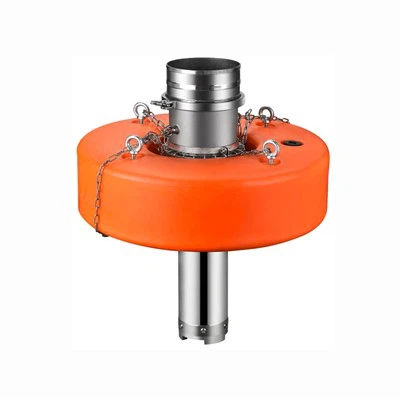
As a supplier of Fire Pontoon Pumps, I am often asked about the anti - cavitation performance of these essential firefighting tools. In this blog, I will delve into what anti - cavitation performance means for Fire Pontoon Pumps, why it is crucial, and how our products excel in this aspect.
Understanding Cavitation in Fire Pontoon Pumps
Cavitation is a phenomenon that occurs when the pressure of a liquid drops below its vapor pressure, causing the formation of vapor bubbles. In the context of Fire Pontoon Pumps, these pumps are designed to draw water from a water source, such as a lake, river, or reservoir, and then discharge it at high pressure to fight fires. When the pump operates, if the pressure at the inlet of the pump drops too low, vapor bubbles form in the water. As these bubbles are carried into areas of higher pressure within the pump, they collapse suddenly. This collapse generates shock waves that can cause damage to the pump components, including the impeller, casing, and seals.
The consequences of cavitation in Fire Pontoon Pumps are significant. It can lead to reduced pump efficiency, as the energy that should be used for pumping water is instead wasted on collapsing the vapor bubbles. Over time, the repeated impact of the shock waves can cause pitting and erosion on the pump parts, leading to increased maintenance costs and a shorter pump lifespan. In a firefighting scenario, a pump suffering from cavitation may not be able to deliver the required water flow and pressure, which can compromise the effectiveness of fire - fighting operations.
Why Anti - Cavitation Performance Matters
For Fire Pontoon Pumps, anti - cavitation performance is of utmost importance. In firefighting, time is of the essence, and a pump that is prone to cavitation can fail at a critical moment. A reliable anti - cavitation performance ensures that the pump can operate continuously and efficiently, delivering a consistent water supply to the fire scene.
Moreover, Fire Pontoon Pumps are often used in various environmental conditions. They may be deployed in shallow or dirty water sources, where the risk of cavitation is higher. For example, if the water level is low, the pump may have to work harder to draw water, increasing the likelihood of pressure drops at the inlet. In dirty water, debris can clog the pump inlet, also contributing to cavitation. A pump with good anti - cavitation performance can withstand these challenging conditions and still function properly.


Our Fire Pontoon Pumps' Anti - Cavitation Features
At our company, we have invested heavily in research and development to ensure that our Fire Pontoon Pumps have excellent anti - cavitation performance.
One of the key features of our pumps is the design of the impeller. The impeller is the heart of the pump, responsible for imparting energy to the water. Our engineers have optimized the impeller shape and blade design to minimize pressure drops at the inlet. By carefully controlling the flow path of the water through the impeller, we can maintain a relatively high pressure at the inlet, reducing the risk of vapor bubble formation.
In addition, we use high - quality materials for the pump components. The impeller and casing are made of corrosion - resistant and wear - resistant materials that can withstand the impact of cavitation. These materials are selected for their ability to resist pitting and erosion, ensuring a longer lifespan for the pump even in the presence of cavitation.
We also incorporate advanced inlet designs in our Fire Pontoon Pumps. The inlet is designed to provide a smooth and uniform flow of water into the pump. Special filters and screens are installed at the inlet to prevent debris from entering the pump and causing blockages, which can lead to cavitation. These filters are easy to clean and replace, ensuring that the pump can continue to operate effectively in dirty water sources.
Comparing with Other Types of Fire Pumps
When comparing our Fire Pontoon Pumps with other types of fire pumps, such as Commercial Fire Pump and Electric Fire Fighting Pump, the anti - cavitation performance of our Fire Pontoon Pumps stands out.
Commercial Fire Pumps are typically installed in fixed locations, such as buildings or industrial facilities. They are designed to draw water from a reliable water supply system, such as a municipal water main. While these pumps also need to have good anti - cavitation performance, they generally operate under more controlled conditions compared to Fire Pontoon Pumps. Fire Pontoon Pumps, on the other hand, are mobile and need to be able to operate in a wide range of water sources, which requires a higher level of anti - cavitation protection.
Electric Fire Fighting Pumps rely on electricity to operate. They are often used in areas where a power supply is readily available. However, their performance can be affected by power outages. In contrast, our Fire Pontoon Pumps can be powered by various means, such as diesel engines, which makes them more versatile in different firefighting scenarios. And our focus on anti - cavitation performance ensures that they can operate effectively even in challenging water conditions, which may not be the case for all electric fire - fighting pumps.
Testing and Certification
To ensure the anti - cavitation performance of our Fire Pontoon Pumps, we conduct rigorous testing. Our pumps are tested in a variety of simulated conditions, including low - water - level scenarios and with different types of debris in the water. We measure the pump's performance parameters, such as flow rate, pressure, and efficiency, to ensure that they meet or exceed industry standards.
In addition, our pumps are certified by relevant international standards organizations. These certifications are a testament to the quality and reliability of our products, including their anti - cavitation performance. Customers can have confidence in the performance of our Fire Pontoon Pumps, knowing that they have been thoroughly tested and meet the highest industry standards.
Conclusion
The anti - cavitation performance of Fire Pontoon Pumps is a critical factor in their effectiveness and reliability. Our company, as a supplier of Fire Pontoon Pumps, is committed to providing products with excellent anti - cavitation features. Through advanced design, high - quality materials, and rigorous testing, our pumps can operate efficiently and continuously in various firefighting scenarios, even in challenging water conditions.
If you are in the market for reliable Fire Pontoon Pumps with outstanding anti - cavitation performance, we invite you to reach out to us for a detailed discussion. Our team of experts is ready to assist you in selecting the right pump for your specific needs and to provide you with all the necessary information and support. Contact us today to start the procurement process and ensure that you have the best firefighting equipment at your disposal.
References
- Perry, R. H., & Green, D. W. (1997). Perry's Chemical Engineers' Handbook. McGraw - Hill.
- Karassik, I. J., Messina, J. P., Cooper, P. T., & Heald, C. C. (2008). Pump Handbook. McGraw - Hill.