What is the Power Consumption of an Electric Fire Fighting Pump?
As a supplier of Electric Fire Fighting Pump, I often get asked about the power consumption of these crucial devices. Understanding the power consumption of an electric fire fighting pump is essential for various reasons, including cost - efficiency, system design, and overall energy management.
Factors Affecting Power Consumption
The power consumption of an electric fire fighting pump is influenced by multiple factors. First and foremost is the pump's flow rate. Flow rate refers to the volume of water that the pump can move within a specific period, usually measured in gallons per minute (GPM) or liters per second (L/s). A higher flow rate generally requires more power. For example, a pump designed to deliver 500 GPM will consume more electricity compared to a pump with a 200 GPM capacity when they are both operating.
Another significant factor is the total head of the pump. Total head is the sum of the vertical distance the water needs to be lifted (static head) and the pressure losses due to friction in the pipes, valves, and fittings (friction head). A pump that has to lift water to a greater height or deal with a long and complex piping system will have a higher total head and thus require more power to operate.
The efficiency of the pump motor also plays a vital role. Modern, high - efficiency motors convert a larger percentage of the electrical energy they consume into mechanical energy to drive the pump. In contrast, older or lower - quality motors may waste a significant amount of energy as heat, resulting in higher power consumption for the same level of pumping performance.
Calculating Power Consumption
To calculate the power consumption of an electric fire fighting pump, we can use the following basic formula:
[P=\frac{\rho\times g\times Q\times H}{\eta}]
Where:
- (P) is the power in watts (W)
- (\rho) is the density of water (approximately (1000\ kg/m^{3}))
- (g) is the acceleration due to gravity ((9.81\ m/s^{2}))
- (Q) is the flow rate in (m^{3}/s)
- (H) is the total head in meters (m)
- (\eta) is the efficiency of the pump - motor system
Let's take an example. Suppose we have a pump with a flow rate (Q = 0.1\ m^{3}/s), a total head (H = 50\ m), and a pump - motor efficiency (\eta= 0.7).
First, we calculate the numerator: (\rho\times g\times Q\times H=1000\times9.81\times0.1\times50 = 49050)
Then, the power (P=\frac{49050}{0.7}=70071.43\ W) or approximately (70.1\ kW)


This is a simplified calculation, and in real - world scenarios, other factors such as power factor and motor losses need to be considered.
Power Consumption in Different Applications
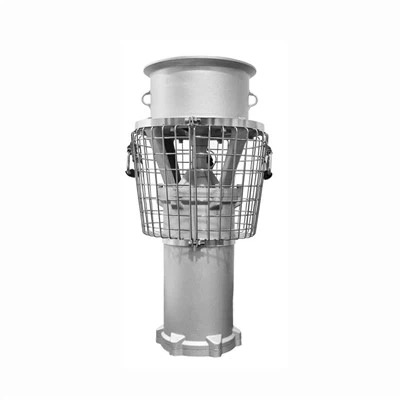
In commercial buildings, Commercial Fire Pump systems are designed to meet specific fire protection requirements. These pumps may need to operate for extended periods during a fire event. For example, in a large shopping mall, the fire pump may need to supply water to sprinkler systems on multiple floors. The power consumption in such cases can be substantial, especially if the building has a high - rise structure.
In industrial settings, the power consumption of fire pumps can vary widely depending on the nature of the industry. Chemical plants, for instance, may require pumps with high flow rates and high heads to deal with potential large - scale fires. These pumps often have powerful motors and can consume a large amount of electricity.
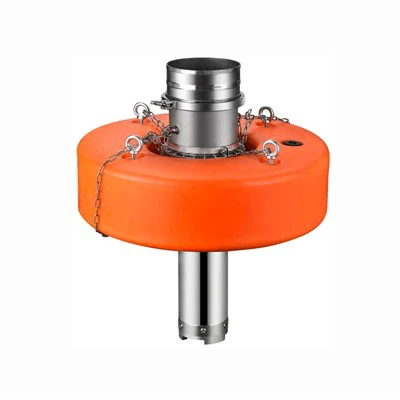
For fire - fighting operations in remote areas or near water bodies, Fire Pontoon Pumps are used. These pumps draw water directly from lakes, rivers, or other water sources. Their power consumption depends on the distance the water needs to be pumped and the required flow rate. Since they are often used in emergency situations, they need to be reliable and capable of delivering water quickly, which may also result in relatively high power consumption.
Strategies to Reduce Power Consumption
There are several strategies that can be employed to reduce the power consumption of electric fire fighting pumps. One approach is to optimize the system design. This includes proper sizing of pipes, minimizing the length of the piping system, and using low - friction fittings. By reducing the total head, the pump will require less power to operate.
Regular maintenance of the pump and motor is also crucial. Keeping the pump impellers clean, ensuring proper lubrication of bearings, and checking the alignment of the motor and pump can improve the overall efficiency of the system. A well - maintained pump - motor system will consume less power compared to a neglected one.
Using variable - speed drives (VSDs) is another effective way to reduce power consumption. VSDs allow the pump motor to operate at different speeds according to the actual demand. For example, during normal times when the fire protection system may only need a minimal flow rate, the pump can run at a lower speed, consuming less power. When a fire occurs and a higher flow rate is required, the VSD can increase the motor speed accordingly.
Importance of Understanding Power Consumption for Buyers
For buyers of electric fire fighting pumps, understanding power consumption is of utmost importance. It directly impacts the operating costs of the fire protection system. A pump with high power consumption will result in higher electricity bills over the long term. Additionally, in areas where electricity is scarce or expensive, choosing a pump with lower power consumption can be a significant cost - saving measure.
Moreover, understanding power consumption can also help in the selection of the appropriate pump for a specific application. Buyers need to balance the required pumping performance with the power consumption to ensure that the fire protection system is both effective and cost - efficient.
Conclusion
In conclusion, the power consumption of an electric fire fighting pump is influenced by various factors such as flow rate, total head, and motor efficiency. Calculating power consumption accurately is essential for system design and cost estimation. Different applications, including commercial buildings, industrial settings, and remote fire - fighting operations, have different power consumption requirements.
As a supplier of electric fire fighting pumps, we are committed to providing our customers with pumps that offer high performance while minimizing power consumption. We can assist you in selecting the right pump for your specific needs, taking into account factors such as flow rate, total head, and energy efficiency.
If you are interested in learning more about our Electric Fire Fighting Pump products or have any questions regarding power consumption and pump selection, please feel free to contact us for a detailed discussion and procurement negotiation. We look forward to serving you and helping you build a reliable and energy - efficient fire protection system.
References
- Crane, D. S. (2012). Fluid Mechanics and Thermodynamics of Turbomachinery. Wiley.
- Karassik, I. J., Messina, J. P., Cooper, P. T., & Heald, C. C. (2008). Pump Handbook. McGraw - Hill.